Father of Four Diagnosed with Rare, Incurable Eye Cancer After Routine Eye Test Now Racing to Raise Funds for Treatment
Jez Bridges had no symptoms before an eye exam detected a mole that turned out to be uveal melanoma, which has since spread to his liver.
NEED TO KNOW
- Jez Bridges was diagnosed with uveal melanoma, a rare eye cancer, after a routine eye test picked up on a mole on his eye.
- Doctors later found the cancer had spread to his liver, and he has been given less than two years to live.
- His family has launched a fundraiser to help cover the cost of a private treatment not offered by the NHS, hoping to buy him more time.
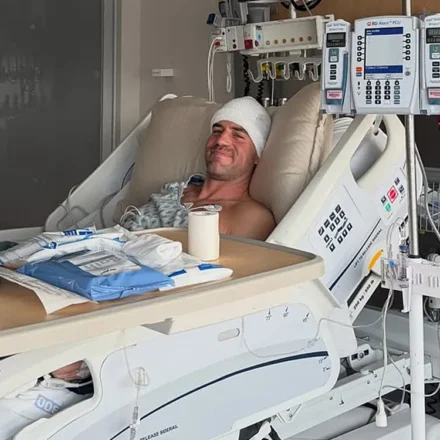
A father of four is facing a devastating cancer diagnosis that started with nothing more than a standard eye checkup.
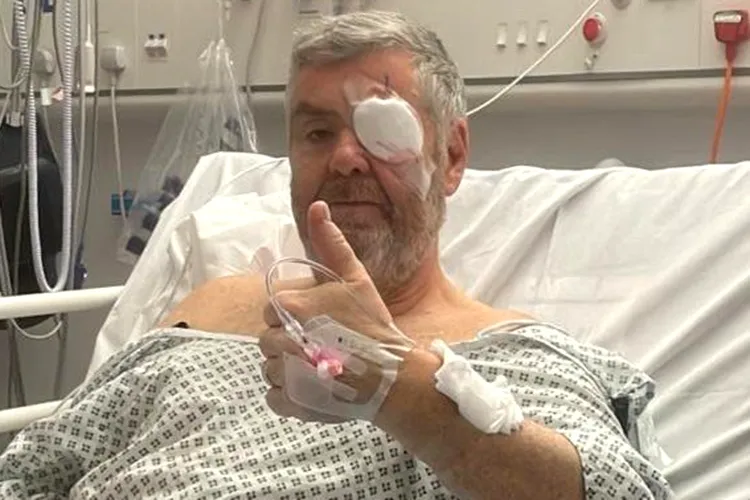
Jez Bridges, 59, went in for his annual eye exam at an optician in Staffordshire, England, in July 2025. During the visit, he was offered an optical coherence tomography scan a test that captures a detailed, layered image of the eye rather than just its surface. That scan picked up on something unusual: a small mole. Further testing confirmed it was uveal melanoma, a rare form of eye cancer, according to the BBC.
At the time, Bridges felt completely fine. That’s part of what makes the disease so dangerous it often develops without any warning signs until it has already progressed. Six months after his initial diagnosis, scans revealed the cancer had spread to his liver. Doctors have told him he likely has less than two years left to live.
Bridges described the disorienting nature of a diagnosis with no physical warning. He told the BBC he still has “no symptoms whatsoever,” explaining that by the time symptoms would show up, treatment options would already be limited.
Now, Bridges and his family are trying to raise more than $270,000 to pay for chemosaturation, an intensive, targeted form of treatment that isn’t available through Britain’s National Health Service. The therapy won’t cure his cancer, but it could meaningfully extend the time he has left with his wife, Kate, and their two daughters and two sons.
Uveal melanoma is considered rare, affecting only a small number of people each year, and it’s notoriously difficult to catch early precisely because it rarely produces symptoms until it has already advanced which is why routine eye scans like the one Bridges received are increasingly being flagged by optometrists as a potential early-detection tool, even for patients who feel completely healthy.
For Bridges, the hardest part isn’t his own prognosis it’s everything he stands to miss. He spoke about the milestones he may not live to see, from his children’s futures to the possibility of grandchildren.
His sister, Justine Owens, who set up the family’s GoFundMe campaign from her home in Kempsey, Worcestershire, described how quickly everything changed for the family. She said the diagnosis has “changed the lives of his entire family,” and that what once felt like a future full of milestones and celebrations has been replaced by uncertainty.
Owens also emphasized that her brother isn’t chasing anything extravagant with the time he has left just ordinary moments with the people he loves.
There is reason for some cautious hope in cases like Bridges’. Jo Gumbs, chief executive of the charity Ocular Melanoma UK, pointed to recent research suggesting certain treatments can lead to a positive outcome in roughly nine out of ten patients with the disease, whether that means shrinking the cancer, stopping its spread, or simply stabilizing it.
For now, Bridges’ family is focused on the fundraiser and on making the most of whatever time remains treasuring ordinary days together rather than counting down to what’s ahead.
This is a sensitive topic involving terminal illness. If you or someone you know is coping with a serious health diagnosis, organizations like the American Cancer Society or Macmillan Cancer Support (UK) offer resources and support.