Virginia Primary 2026: Voters Head to the Polls in Delayed Senate and Congressional Races
More than 30 candidates are on the ballot statewide, after redistricting uncertainty pushed the contest nearly two months past its usual date.
NEED TO KNOW
- Virginia’s 2026 primary elections are being held Tuesday, roughly two months later than the state’s traditional June date, after a redistricting referendum left the congressional map in question.
- Three Republicans are competing for the chance to challenge Democratic U.S. Sen. Mark Warner, while contested House primaries are playing out in seven of Virginia’s 11 districts.
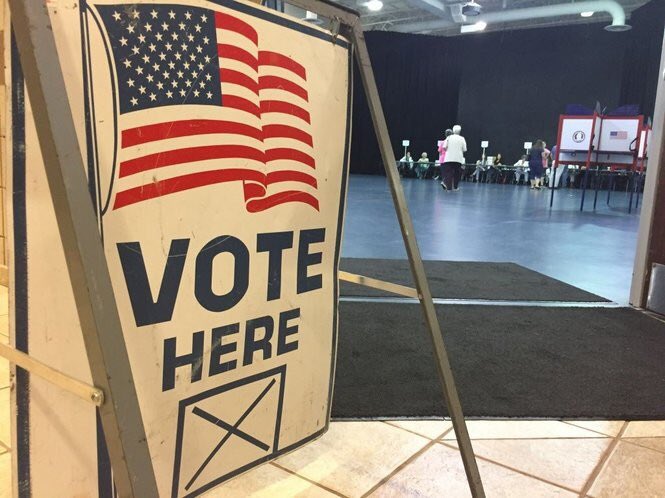
- Polls are open from 6 a.m. to 7 p.m., and voters need an accepted form of ID or a signed identity confirmation statement to cast a ballot.
Virginia’s 2026 primary election is underway Tuesday, with voters across the commonwealth choosing party nominees for a U.S. Senate seat and congressional races that will shape the state’s representation heading into November. The vote comes later than usual: a spring referendum over how to redraw the state’s congressional map, and the resulting uncertainty about which district lines would apply, delayed what’s normally a June nominating contest by nearly two months.
What’s on the Virginia primary 2026 ballot?
The marquee race is the Republican Senate primary, where three candidates are competing for a shot at unseating Warner, who is seeking a fourth term and faces no primary challenge of his own. Northern Virginia business owner Kim Farington has built her campaign around inflation, government spending and border security. Retired Army Maj. Gen. Bert Mizusawa, a former Pentagon official, is emphasizing defense and national security credentials. Businessman and Navy veteran David Williams is running as an outsider promising tax cuts and a smaller federal government. Virginia hasn’t sent a Republican to the U.S. Senate since 2002, when John Warner no relation to the current senator won his final term.
Beyond the Senate race, contested primaries are unfolding in seven of the state’s 11 congressional districts. The largest field belongs to the 1st District, where seven Democrats are vying to challenge longtime Republican Rep. Rob Wittman, with the candidates split over whether to nominate a more progressive or more moderate contender. In the battleground 2nd District, former Rep. Elaine Luria a retired Navy commander who lost her seat to Republican Jen Kiggans in 2022 is attempting a comeback against three other Democrats.
The 5th District features primaries on both sides: freshman Republican Rep. John McGuire, a former Navy SEAL, faces a challenge from Marine veteran Melanie Lucero, while three Democrats, including former Rep. Tom Perriello, are competing for their party’s nod in a district Democrats argue has become more competitive on affordability concerns. Three-way Republican primaries are also playing out in the 7th District, where the winner will face freshman Democratic Rep. Eugene Vindman, and in the open-leaning 10th District held by Democratic Rep. Suhas Subramanyam. Meanwhile, six-term Democratic Rep. Don Beyer faces four challengers in the 8th District, and three Democrats are seeking to take on longtime Republican Rep. Morgan Griffith in the conservative 9th District.
Why is Virginia’s primary happening in August this year?
The unusual timing traces back to a redistricting fight earlier this year. In April, Virginia voters narrowly approved a constitutional amendment permitting mid-decade redistricting, opening the door to a new congressional map that election analysts said could have shifted as many as 10 of the state’s 11 U.S. House seats toward Democrats. The fight over which map — the old lines or the new ones — would actually govern this year’s elections dragged into the summer, pushing the primary from its usual June slot to August and compressing the runway candidates have before the November general election.
How to vote in the Virginia primary
Polls are open Tuesday from 6 a.m. to 7 p.m., and anyone already in line by closing time will still be allowed to vote. Because Virginia doesn’t register voters by party, anyone eligible can request either party’s ballot in localities holding both primaries but not both at once. Acceptable identification includes a driver’s license, passport, voter confirmation document, utility bill or bank statement; voters without ID can still cast a ballot by signing an identity confirmation statement or submitting a provisional ballot. Voters can check their polling location and registration status through the Virginia Department of Elections’ online portal.
Results will be tallied through the evening as polls close, with winners advancing to face their general-election opponents on Nov. 3 races that will help determine control of narrowly divided House and Senate contests nationally, and whether Virginia’s new political map holds up as drawn.
Sources