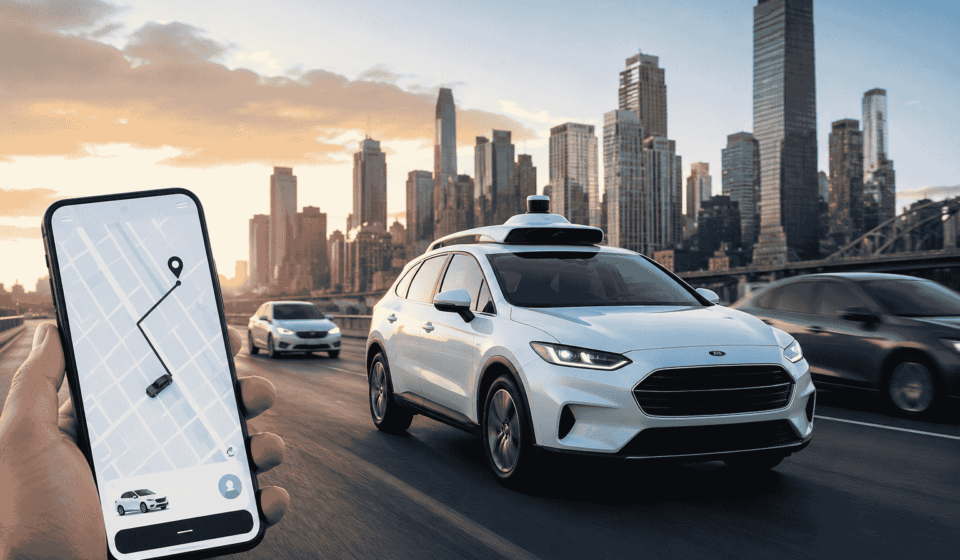
Uber’s Gross Bookings Have Grown 25%, and it just announced the formation of an AV Unit. Should This be the Transport Stock for 2026?
The company has recorded a 25% increase in Gross Bookings, as it moves into the autonomous vehicle space.The company’s Gross Bookings increased 25% as it steps into the autonomous vehicle arena.
Uber Technologies has yet again reported solid financial performance, expanding its role as one of the world’s largest transportation and delivery companies. The firm reported strong growth in gross bookings, revenue and operating profit, and announced a significant push in their autonomous vehicle efforts.
The latest figures underscore how well Uber’s core businesses of rides and food remain doing. Meanwhile, the company is also pouring money into self-driving technology, which could turn its business model over during the next 10 years should it become widely used.
Strong growth in core businesses.Robust expansion of core businesses.
Uber’s gross bookings rose 25% year over year to $53.7 billion in the first quarter of 2020. Gross bookings is the revenue generated from rides, food delivery and freight services Uber processes while excluding the payment from drivers and merchants. The upturn is a continuation of consumer demand in various markets despite the current economic uncertainty.
Mobility continued to be the firm’s biggest revenue generator, representing about 56% of the total sales. The ride-hailing segment remained healthy thanks to continued strong travel demand and growing urban transportation needs, as well as greater user participation.
Uber’s delivery arm also performed well, accounting for approximately 33% of total revenue. Consumers have continued to order groceries and retail items, both through online and direct delivery, and the orders were also healthy.
Uber’s freight business is still smaller, but offering some diversification by linking shippers to carriers with its digital logistics platform.
Revenue and Profit are continuing to improve.Revenue and Profit continue to improve.
Uber reported a first quarter revenue of $13.2 billion, an increase of 10% on a constant-currency basis. A steady stream of customers, a growing international footprint, and enhanced efficiency were all factors that helped the company thrive.
One of the biggest highlights of the quarter was Uber’s strong profitability. Operating income (GAAP) rose 57 percent from a year ago to $1.9 billion, reflecting the company’s ability to increase earnings while controlling operating expenses.
The financial result is the result of a series of initiatives aimed at streamlining the operations, improving platform efficiency and expanding into higher margin services across the Uber ecosystem.
Growing profitability is a positive sign for investors, as it suggests that Uber is moving closer toward financial sustainability, a step from prioritizing quick expansion that has been years in the making.
The share of autonomous vehicles becomes a greater concern.The proportion of autonomous vehicles increases.
Uber currently has a profitable business, but it is also investing heavily in the future with autonomous vehicles.
The company recently established its own business unit, called Uber Autonomous Solutions, to help with deployment and commercialization of self-driving vehicle fleets. Instead of building out all of the autonomous technology, Uber will partner with organizations that specialize in developing autonomous driving systems, and also bring those vehicles on board its transportation system.
The strategy enables Uber to concentrate on running the marketplace while the technology partners develop the self-driving vehicle features.
The company says autonomous transportation can increase efficiencies, increase the number of vehicles available and lower long-term operating costs.
Self-Driving Technology Matters is the name of the caravan.Self-Driving Technology Matters is the caravan.
One of the biggest expenses for Uber is driver compensation. If eventually available, Uber would have a great opportunity to save on costs of human drivers and even make more services available all hours of the day.
Reduced operating expenses should increase profit margins and enable Uber to provide more competitive quotes to customers in the long run.
Additionally, autonomous vehicles have the potential to decrease ride wait times, optimize fleet utilization, and offer new mobility services in urban areas where driver availability is scarce.
That’s why autonomous driving is among the most promising long-term investment prospects for transportation companies.
There are still challenges in the industry.
There is a lot of excitement around the autonomous vehicle, but it will be years till it is widely adopted.
Creating self-contained driving systems presents a number of difficult technical, regulatory, and safety challenges. Companies will need to make sure self-driving cars are able to navigate through all sorts of traffic and abide by government regulations.
Commercial trials of autonomous vehicles have yet to be rolled out on a broad scale, but several technology and automotive companies are still spending billions of dollars on research for driverless vehicles, while some are experimenting in specific areas and controlled conditions.
These problems indicate, however, that while the future of autonomous travel has great promise, financial gains could become realized a number of years in the future.
Strategic investments are made to achieve long-term goals.Strategic investments are investments made towards a long-term goal.
Uber has been building on its autonomous vehicle involvement with strategic partnerships and investments.
The company has also invested in companies that are working on next-generation transportation products such as an equity stake in Lucid Motors. The investments are a sign of Uber’s dedication to staying competitive in an ever-changing transportation market.
Uber’s goal seems to be to establish a wider range of transportation services, not just relying on traditional ride shares, but also on future autonomous and human-powered systems.
The flexible approach will be able to help the company to adjust to the evolving technology and market conditions.
Table of Contents
Investor Outlook
Uber’s stock has been a bit volatile over the past year but many investors are still watching the company’s improving financials.
Uber’s core operations are faring well as gross bookings keep rising, revenue has been improving, profitability has been strong, and its operations are growing internationally.
The launch of Uber Autonomous Solutions puts the company in a prime position to play a key role in what many analysts think may be one of the biggest technological changes in the transportation industry.
Investors must also be aware that the field of autonomous driving is still in the early stages, and the timeline is far from certain, as are the investment needs and regulatory challenges.
Final Thoughts
Uber’s quarterly results are once again a testament to its continued success in its core businesses. Gross bookings increased 25% and revenue and operating income grew strongly, too, in response to strong demand for ride-sharing and food delivery services.
In addition to being successful, Uber has also shown a heavy interest in investing in the autonomous vehicle technology with the launch of Uber Autonomous Solutions, which indicates the company’s intent to influence the future of transportation.
Uber has a number of obstacles to successfully implement autonomous driving in the real world before it can be put into practice, but also has a number of advantages such as its profitable business, global scale and long-term development strategy, making the transportation company one of the busiest in the market.
In the realm of investing in the future of mobility, Uber is a company to watch as it continues to maintain its impressive performance while also investing in the future of transportation.