Nevada Woman Gets Sentenced for Faking her Cancer and Defrauding Friends of Nearly $20,000
A Nevada woman has been sentenced for making out false promises of business opportunities and claiming to have pancreatic cancer to trick close friends and acquaintances out of nearly $20,000.
The case has come to light owing to the fact that it was not just the financial aspect that was involved, but the personal aspect of relationships and sympathy was also exploited. The defendant’s deceptive schemes involved pretending to be a friend and a business associate, offering to help with travel opportunities and fake business proposals, as well as a fake cancer diagnosis, to foster trust with others, prosecutors said.
Instead of pleading guilty, I will be sentenced to 25 years in prison.Guilty plea means 25 years in jail.
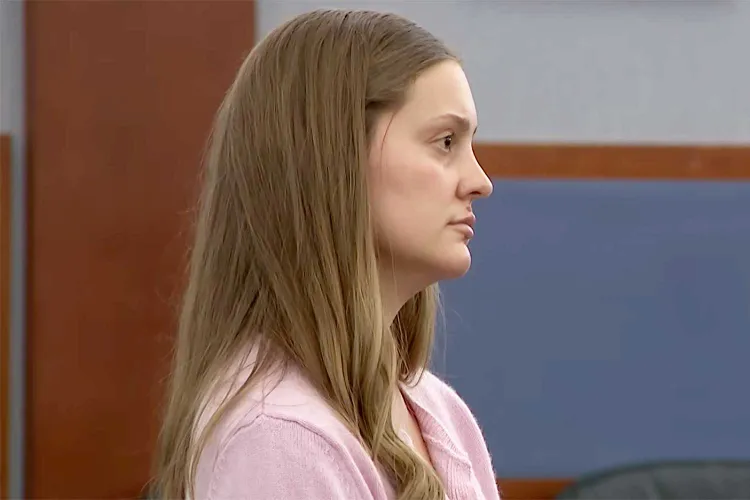
The Henderson, Nev., resident, Haleigh Morgan Knight, earlier this year pled guilty to charges in connection with the fraud scheme.
A Clark County judge gave her a 30-day jail term, with two years of probation. She has been sentenced to jail and to pay back almost $19,800 to the people who lost their money in the scheme.
The court also ordered Knight to appear at jail one week to start her sentence.
Davis’s clients were convinced that they were investing in a business.Davis believed that she was helping her clients invest in a business.
Knight claimed to be a successful travel content creator with ties to luxury travel and hotels in court documents.
She persuaded a handful of friends to embark on a business together based on travel, creating content online and developing luxury holidays.
The victims thought they were making deposits to their money-back guarantees for future trips and business opportunities that in the end would bring them profit.
But the promised vacations were called off again and again and each postponement had a new reason.
The victims were not refunded anything but were given excuses instead.
What was the purpose of this activity?Why were delayed questions included in this activity?
The biggest part of the case that was troubling was Knight’s false diagnosis of having pancreatic cancer.
Victims told the court that they were less concerned with getting their money back because they thought she may have been suffering from a serious illness.
Instead of asking for a refund they concentrated on the person they felt was a close friend.
Friends cooked for her family, cared for her kids, gave her money and emotional support in what they thought was a life threatening medical situation.
Hindsight gives victims the time to reflect on the cancer narrative and how it led them to avoid asking about the missing money earlier.
A sequence of false documents was used to elaborate scheme.A series of false documents elaborating scheme.
Investigators indicated that the scam wasn’t just a matter of assurances.
In court, Knight allegedly used multiple phone numbers, claiming to be from travel companies, and manufactured contracts.
The bogus paperwork made investors believe their capital had been safe and that luxurious trips were on schedule.
Several families paid thousands of dollars in deposits and travel expenses believing it was all real.
Some also went out of their way to buy suitcases, passports, other travel gear and more money to prepare for travels that never took place.
Families made significant financial sacrifices.Families made big sacrifices for the money.
The losses were not just monetary; they also included losses suffered by the recipient of the money.
One victim said that her family had changed their plans for her life due to the business deal that had been promised.
Her partner even quit his full-time job expecting the family to start making and travelling together, according to statements made in court.
The plans were never realized.
Witnesses described being “devastated” to learn that the whole opportunity was a sham.
In addition to the financial damage, they had to face the disillusionment of a long-time trusted ally.
Lasting impact is characterized by victim statements.Victim statements outline lasting impact.
In sentencing, several victims addressed the court directly of the emotional harm that resulted from the deception.
They said they trusted Knight because of the personal connection they had with him and felt they were supporting someone who was dealing with business problems as well as a serious medical diagnosis.
Rather, they found that the disease was a sham and the promised business prospects were nonexistent.
The victims reported being deceived in money matters, their family arrangements and their trust in people.
Many referred to it as one of the most painful betrayals in their lives.
Table of Contents
Knight Apologizes in Court
In the sentencing hearing, Knight apologized for her actions.
She informed the judge that she was still working, supporting her family and looking to get assistance to understand the decisions which led to the criminal case.
Knight also pleaded for the court to give her a chance to improve her life, pay back the victims and show she has learned from her mistakes.
The court accepted the apology but in the end concluded that it was appropriate to send the man to jail for the severity of the crimes.
Judge Condemns the Fraud
The judge, in imposing the sentence, condemned Knight’s actions, saying it caused harm to “multiple victims.”
The court highlighted that the fraud was not limited to financial gain, but also involved manipulating friendships, compassion and trust.
The defendant fooled friends into thinking she had a serious illness and encouraged them to delay investigations of her absconding with money until she could look after her family.
The judge decided that it was fair to send them to jail and to pay them back.
Restitution Ordered
The sentence requires Knight to pay a restitution of around $19,787 to the victims, as part of the sentence.
Restitution would be to pay back the person who has been financially impacted by the fraud, but victims said there would be no remedy to the emotional toll of the experience.
When considering any business opportunity, it is essential to always check it out and confirm the details.
It is a common practice with financial professionals to always confirm investment opportunities, even those from trusted sources like a family member or friend.
People should ask to sign in writing before they deposit money or enter into business relationships and confirm company affiliations by contacting companies or travel providers and/or hotels directly, before entering into reservations.
Close personal relationship fraud is not common but such instances provide a reminder of how trust can be misused.
Final Thoughts
The Nevada fraud case is a reminder that fraud is not perpetrated by an individual who is not a friend of the victim. In this case, the victims thought that they were supporting a close friend and a good business opportunity. Rather, they ended up losing almost twenty thousand dollars and found out that the cancer diagnosis that was cited for the repeated delays was bogus.
The legal action is over and the defendant has been sentenced, placed on probation and ordered to pay restitution to the court. But it will take much longer for the victims to restore their financial stability and personal trust.