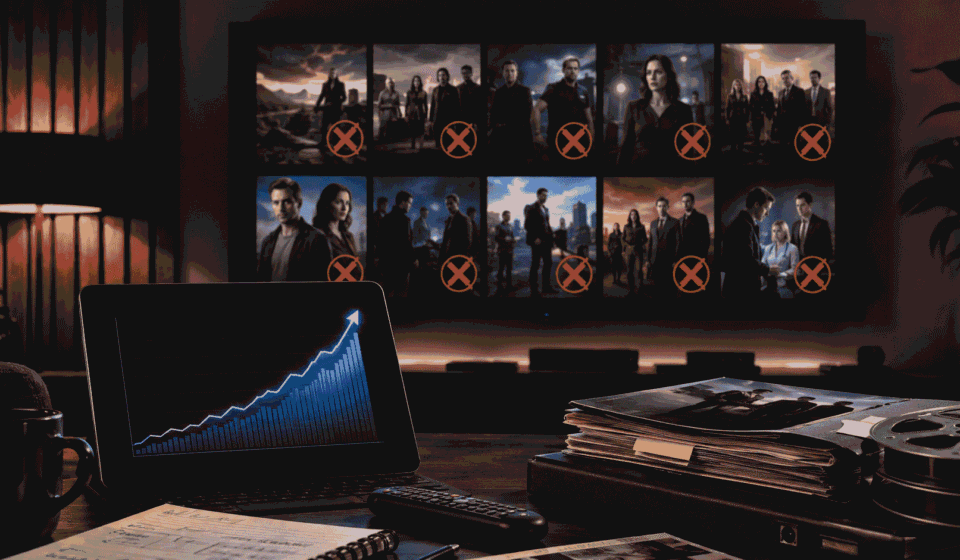
While CBS has plenty of viewers, it has been canceling multiple popular shows.
What I did find myself having one of these “TV moments of realizations” was when I sat down to check my watchlist I looked at (for example) the next season for a show I was watching, and it wasn’t coming back.
Don’t get this wrong!
Not that the fan supporters were unaware.
Although it was a complete flop.
It was simply done.
That’s why it’s such a pain when CBS cancels its programs. Many shows which are enjoying a tremendous popularity and have acquired strong viewserships and fans during the pandemic period have been either cancelled or ended yet fans have not had their fill. If one scours it up, which obviously is their duty, the surface appearance is quite difficult to understand.
How would it make sense for a network to end a show that viewers are watching?
I have been viewing network TV schedules for several years, ratings sheets and fan feedback, as well as trends in streamed apps, and one thing I have observed is that no TV show is necessarily cancelled if it is not popular. Even an on-air popular show is not necessarily a business sense for the network sometimes.
It’s that that makes the CBS thing a big debate.
Table of Contents
The hard part: good viewing doesn’t necessarily mean good safety.
For awhile viewers had the very simple idea on how television operates.
Programs that did well on the ratings remained.
It was been cancelled if ratings did not do well.
True – but not so much in the digital environment of today’s media landscape, where live TV numbers still rule but significantly less. The TV game, however, is dirtier these days. While CBS remains a premier broadcast network, it is also having to contend with streaming, licensing fees, production budgets, ad pressures, corporate strategies and minutes.
It is important to remember that the total viewers are only one of the elements in the decision.
This is something that many fans do not expect to hear. A programme can still be cancelled, even if it continues to attract millions of viewers, is costly to make, consists of another company or is no longer of interest for the network’s grand schemes.
Despite that it does not feel good. It does tell why, however.
Also, here’s why the CBS cancellations don’t seem the same.
Many of the shows in question weren’t little-known experiments for that reason taking these shows off the airwaves doesn’t sting the same if none of them are an offbeat experiment. This wasn’t about barely-seen little shows that are pulled off the air after only three episodes.
They thought about titles which were already in use and had a following.
TV shows like FBI: Most Wanted, FBI: International, The Equalizer and S.W.A.T. had a following. These were shows that people watched each week, DVR’d, streamed later and talked about on the internet. They all work really nicely with the assets coming out of CBS serial drama, good storytelling and a nice way of following the series; crime, action, police cops, and character drama.
This is why there was such a reaction.
People know when a new show is not going to continue on when it reaches the end of one season. Once a project is on air and it continues to have a strong audience it is cancelled – so it is personal. The sense that network is indifferent towards the loyal ones.
The same with other networks have been noticed. This often occurs after a show “settles in” to an individual or viewers’ weekly schedule, and then the network moves in for the kill, believing that what they are seeing isn’t as golden as fans think.
Much of the frustrations exist in that pit of conflict between viewer feelings and business rationale.
The ratings aren’t as easy as they appear.
One thing that many fans may have gotten wrong is depending on a television show having a “million viewers” to equate to a profitable show.
However, this is not always the case.
As far as TV ratings, I look at a couple of things when:
Total viewers
The 18–49 demographic
Live viewing vs delayed viewing
Streaming performance
Production cost
Studio ownership
Syndication value
How old the show is
Follow-up to Next Schedule fit
The 6 million show might look better than the 3 million show. However, if the show has a lot more viewers, is more expensive to make, and is made by a studio different from the network, it may be more appealing in terms of return than a lower viewership show that costs less to produce and has a lower cast salary.
From a fan standpoint, this seems like a bad idea, but from a network point of view, it can quickly add up to bad news.
One of the reasons for this is that the older, loyal audience is the one that tends to watch the best shows on CBS. It can be great for overall viewability, but advertisers and networks are also interested in particular audiences. Nowadays, the need for streaming performance is added. In the case of a show that performs well on broadcast, but not on streaming, the network may wonder about the future of a show as well.
Hence the fan response that goes: “How can they cancel it?” The ratings have been good.”
Typically the response is “good visible ratings, ‘the full business picture may not have been.”
The problem nobody dares to talk about…Cost!
When it comes to network dramas, big dramas aren’t cheap!
Crime dramas, action shows, international locations, extensive makeups and stunt work, long seasons and location shooting are all factors that can increase the cost. Cinema budgets can go higher when the movie heads to sequel or second seasons, as the actor’s remuneration, production fees and other cinema costs increase over time.
That is a large part of why long running shows are susceptible.
A first-season drama may be lower due to being something fresh and having low anticipation. This can be costly if the show has a large cast and complicated production, for a fifth or sixth season.
That’s one thing that made fans so emotional about FBI: International. The show outed its any and all local crime drama tropes, and had a different taste to it as a result. A part of what made it interesting was the that. Proceeding overseas can also be more difficult and costly than a more restrained domestic procedural, however.
This is the same across the board. The completed episode looks as the viewer sees. The budget sheet is accessible by networks.
At times, the budget sheet prevails.
CBS could be looking to make room for some newer, less-expensive, more strategic programming.
Another aspect that gets forgotten is the schedule space.
CBS isn’t blessed with endless mounts of prime time. When the network is seeking new programs, new initiatives or to line up a new franchise for a property it feels closer to, it’s time for another one to either shift or fall by the wayside.
Yes, that sucks, but it’s network television.
It is not as though a show only competes with shows from other networks! It is in competition with the network’s own future plans.
From the other side of the fence, if CBS suspects a new series will be more economically profitable, add more value to a franchise, and/or offer a clearer path to a clean slate down the road, it could make a change over an older series that has a reliable but lucrative audience.
This isn’t to say that fans shouldn’t be upset. It only implies that seldom is one number the basis for renewal decisions.
The network is asking “Did people watch?”
It is also asking:
Another season, can we afford that?
Do we have sufficient ownership of the show?
Does this mean that our streaming platform will benefit?
Is it able to draw in advertisers?
Will it fit in with our next schedule?
What can you find that’s a substitute at a lower cost?
Is it possible for a new television series to gain traction, evolve and expand?
Yes, in that light, the cancellations make sense but even so, it’s annoying to say the least.
Then the ‘streaming effect’ made all the difference.
Network success has been defined by streaming.
It wasn’t that long ago that live on CBS was paramount. These are now examples of the various factors that can be considered in the performance of a show, from Paramount+ to next-day streaming to digital views to library value, international sales and longer platform engagement.
It’s a favourable situation for viewers, as it means shows have another option for viewing. However, it also provides additional mechanisms for network assessments.
If a live action show makes it onto streaming – but not at a strong enough performance – then the network may not see a lot of revenue from that show. Even if it’s doing well on streaming, but it’s too costly, it’s still an issue. The situation becomes complex if it is produced by another studio, as the rights to stream and how profits are divided will be intricate.
This is the reason why sometimes fans are taken aback to see that a show has had huge popularity on social media but is still cancelled.
While social media noise does help, it’s not always enough return when it’s measured.
I myself have done that in the past. I thought that with a loud fanbase, you couldn’t go wrong. This is the case regardless of cancellation anyway. The answer was obvious: Online chatter can help, but the bottom line comes from the business information.
Then the ‘streaming effect” has everything to do with it.
Streaming is how success has been defined on the network.
Just a few moments ago live on CBS was all important. From Paramount+ to next day streaming to digital views to library value, and international sales, among other things — these are now just more of the metrics that can be measured when evaluating a show.
It’s a favourable situation for viewers, as it means shows have another option for viewing. It has other mechanisms, however, for network assessments as well.
If a live action show aired but not performed at a high enough level, then it would be questionable whether the network will generate much income from the show. Even if it’s doing well on streaming, but it’s too costly, it’s still an issue. If produced by another studio, the situation becomes complex by the rights of streaming and how profits are divided will be intricate.
That is why it comes as a surprise to some to see that a show is so popular on social media yet it’s still being cancelled.
There is value in social media chatter, but not always in what’s quantified.
I and my colleagues have done that in the past. I was thinking “what do they have to lose with such a huge fan base?”. This is the case either way, during cancellation. There was always the answer: Online chatter can help, and business information rules.
When a show is in trouble, that is what people CAN do actually.
If you absolutely must support a show that’s about to be cancelled, there are a few tangible things you can do, in addition to angry posting after the slate is wiped.
First things, first let’s binge-watch legally.
It’s CBS, Paramount+, DVR, cable on demand or any legal streaming service. Illegally recorded versions aren’t any help to the show. They can provide an indication about interest but they aren’t helpful in measuring value to the network.
Second, stay near to the release.
In the age of live-streaming, ratings can be less important; however, it is still crucial to get viewers to watch the show. Numbers on same day and/or on next day work over months later.
Thirdly you can add it to your watchlist.
Interest may be indicated by on streams watch, episode completion and repeat watch.
Fourthly, talk about helpful discussions about the show.
Don’t just rail on “CBS is stupid” – tell why the show is important. Discuss characters, plot, character acting, or action scenes or why the show can’t/must be continued. That’s something that makes sense and is quote-worthy by journalists and entertainment sites.
The 5th is related to support of official social media postings.
Likes/comments/shares and the number of views of the official trailer can serve as indicators of engagement.
Sixth – don’t come to expect it waiting for the week of cancelation!
A lot of fan campaigns are begun too late. When the cancellation is made be aware that there are likely systems of contracts and schedules already completed.
Rarely used pitfall: Withaselectall pits only.
The worst error committed by fans is to put the entire responsibility of pitfalls on ratings.
Rating is significant, but not all-important.
People are watching a show and they’re saying, ‘it has good ratings, but production is too expensive, this thing can’t continue. However, a lightweight show can garner faithful fans but not be suitable for a network for the future. One show may have a ton of fans and being owned by another company makes the renewal negotiations more difficult.
But now CBS has called it quits — and it isn’t so unusual.
That isn’t to imply that “these shows have no viewers”, it’s just that it’s incorrect.
Perhaps it’s the financial or the strategic pitch of “these no longer fit the financial or strategic plan.”
It’s a very different message.
Another wrong/misguided thought, that every cancellation is disrespect.
As a fan I know how to feel ignored. Once a show has started to become a habit, the last thing you want is to see it cancelled.
However, not all cancellations are slighting toward viewers.
A network occasionally is just concerned about the show and the numbers just aren’t aligning. At times the producers have the opportunity to tie up some things. At other times casting is prepared to go out on the road. There will be times where a show simply isn’t worth the price tag.
But the saga does not take away the dismay. It does seem to explain why a good show still comes to an end though.
As a viewer, I would prefer a proper ending as opposed to being given a cliffhanger. At the least, if a network is aware of a show’s imminent end, it can provide writers the time to tie up the loose ends.
So what will this look like for CBS consumers in the future?
CBS still airs procedurals, crime dramas, medical shows, legal dramas and other shows that appeal to the masses. That’s not going to change.
But the viewers ought to anticipate further turn.
Producer Odyssey Entertainment, which had been believes to be aiming for more seasons with the strong dramatic CBS series is facing a bit of difficulty. Some shows will still be quite lengthy, but others might be cut short because of economics.
It also means that fans need to pay attention in the news of renewing the series, the performance of streaming and the network schedule. Even if most people are still watching the show, if the show is in its fourth, fifth and sixth season, by no means is it safe.
Business may already be with more stringent questions.
My honest take
While the exit of many of the recognizable shows may be disappointing for the network given they all do fine, it’s hardly a random move on CBS’s part.
It illustrates the rapid transformation in the TV industry.
Viewers are still loyal minded. Cost, ownership, advertising, streaming value and future schedule strategy are how networks think. But if they don’t match up, even vaunted shows can vanish from the air waves.
It’s the awkward reality.
At the fan level, I believe it’s a shame that these decisions are not explained better by the networks. No one wants to hear nothing or assessing in corporate-speak. If you’ve been watching a show for years, you want to know why it has ended.
As one who also views the business side, I can also understand why CBS is making some hard calls. While having strong numbers is good, it’s no longer the sole required factor.
Fans can do their best to support shows at the beginning, view them through official channels, communicate before any renewals are negotiated, and realize that “popular” is not necessarily “profitable”.
But that doesn’t necessarily mean making the cuts any easier to swallow.
However it tends to make them easier to understand.